

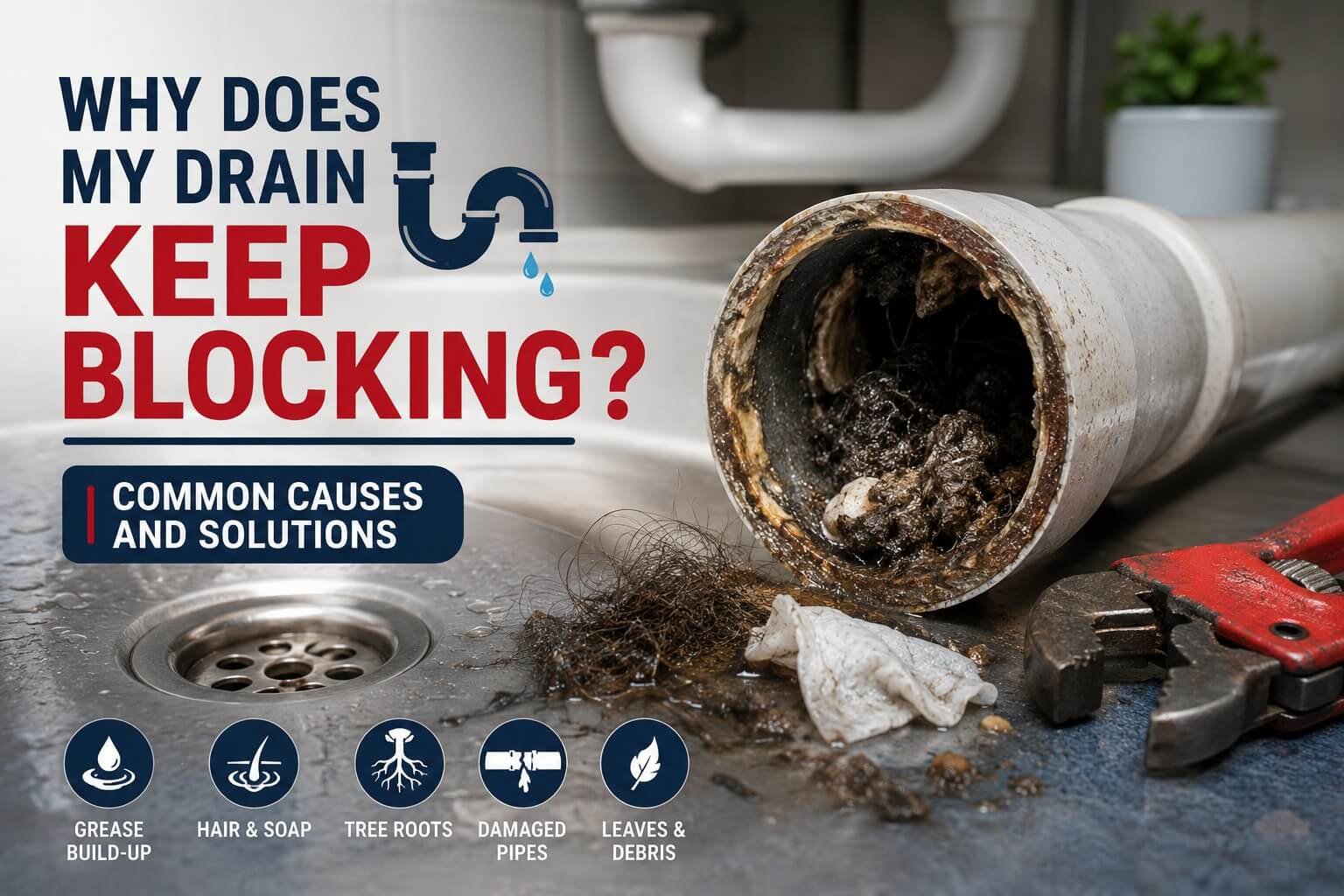
A blocked drain can disrupt a home or business. Water may drain slowly. Bad smells may
appear. Toilets can also become hard to flush. These signs often mean waste is building inside
the pipe.
Recurring blocked drains need more than a quick fix. The cause may sit deep inside the
drainage system. Grease, hair, wipes, roots, or pipe damage can restrict water flow. At C4Plus
Drainage, we find the cause before choosing a solution.
Early action can prevent a small issue from getting worse. A full blockage can cause wastewater
to overflow. It can also damage nearby areas. This guide explains the main causes and the best
ways to deal with them.
Why Does My Drain Keep Blocking?
A drain blocks when waste stops water from flowing freely. The waste may build up over several
weeks. In other cases, a damaged pipe can catch debris each time water passes through it.
Repeated clearance may not solve a deeper fault. A simple drain unblocker can open part of the
pipe. However, grease or debris may remain inside. A proper inspection helps us find the source
of the problem.
Common causes include:
- Fat, oil, and grease
- Hair and soap
- Food waste
- Wet wipes
- Sanitary products
- Tree roots
- Leaves and soil
- Scale build-up
- Broken pipes
- Poor pipe joints
Each cause needs the right treatment. The correct method can reduce the risk of another
blockage.
1. Fat, Oil and Grease Build-Up
Hot cooking fat flows easily down a sink. It then cools inside the pipe. The fat sticks to the pipe
wall. Food and other waste can then stick to this layer.
The opening inside the pipe becomes smaller over time. Water starts to move more slowly. A
professional drain cleaning service removes stubborn deposits. This helps our team restore
normal water flow.
How Can You Prevent Grease Blockages?
Cooking oil should never go down the sink. Leave it to cool first. Place it in a suitable container.
Then dispose of it correctly.
Food scraps should also stay out of the drain. A sink strainer can catch small pieces before they
enter the pipe. Regular drain maintenance can further reduce heavy build-up.
2. Hair and Soap Can Block Bathroom Drains
Hair is a common cause of bathroom blockages. Loose hair enters showers, baths, and basin
drains. It can catch on rough areas inside the pipe.
Soap then sticks to the trapped hair. This creates a larger mass. Over time, we often see water
become slow before the drain becomes fully blocked.
A simple drain cover can catch loose hair. Clean the cover often. This small step can reduce the
need for frequent drain clearing.
3. Wet Wipes Can Cause Toilet Blockages
Toilets should carry human waste and toilet paper. Wet wipes do not break down in the same
way. Sanitary items, nappies, and cotton buds can cause similar problems.
These products may become trapped at a bend or pipe joint. More waste then gathers around
them. A qualified drainage specialist can remove the blockage. This helps us check for hidden
drainage faults.
Avoid flushing unsuitable products. Place them in a bin instead. This habit can protect the
drainage system.
4. Food Waste Can Block Kitchen Drains
Small food pieces often enter the sink during washing. Rice, pasta, coffee grounds, and other
waste can collect inside pipes. Some foods also expand after absorbing water.
Grease makes the problem worse. Food sticks to the greasy pipe surface. Professional drain
cleaning removes this build-up. Special equipment helps us reach deeper areas.
Scrape plates before washing them. Use a sink strainer as well. These steps help keep food
away from the drainage system.
5. Tree Roots Can Enter Underground Drains
Tree roots grow towards sources of water. A small crack in an underground pipe can provide an
entry point. Roots can then grow inside the drain.
The roots catch paper and other waste. This can cause the same drain to block again and
again. A CCTV survey helps us see root growth and other defects inside the pipe.
An outdoor drain cleaning service may remove the blockage. However, damaged pipes may
also need repair. Treating the pipe defect can reduce future problems.
6. Damaged Pipes Can Cause Repeated Blockages
Underground pipes can crack or move over time. A joint may also become displaced. Waste can
catch around the damaged section.
Clearing the waste only treats the immediate blockage. The damaged area can collect new
debris later. A professional drainage contractor can inspect the system. The findings help us
choose the right repair.
A CCTV drain survey is useful in this situation. The camera shows the inside of the pipe. It can
reveal cracks, poor joints, roots, or collapsed sections.
7. Leaves and Soil Can Block Outdoor Drains
Outdoor drains collect rainwater. They can also collect leaves, mud, moss, and litter. This debris
can cover the drain opening or enter the pipe.
Heavy rain can expose the problem. Water may collect around the drain. It may also overflow
into nearby areas. Routine drainage clearing services remove this debris. This helps us prevent
full blockages.
Check outdoor drain covers often. Remove visible leaves and debris. Regular care is especially
useful during wet weather.
8. Scale Can Make Pipes Narrower
Minerals and other deposits can form inside some pipes. The layer can become thicker over
time. This reduces the space available for water.
A narrow pipe catches waste more easily. This can lead to slow drainage and repeated
blockages. Suitable drain cleaning services remove these deposits. An inspection helps us
check the pipe condition.
Do not ignore slow water flow. It can be an early sign of a developing problem.
Why Does My Drain Block Again After Clearance?
A drain can block again when the first clearance does not remove the full obstruction. A small
opening may allow water to pass. However, waste can remain around the sides of the pipe.
For example, a kitchen pipe may contain a thick layer of grease. Basic clearance can create a
path through the middle. New food waste then sticks to the grease. Soon, we may see the same
blockage return.
Structural faults can also cause repeat problems. Cracks and displaced joints can trap waste.
Proper blocked drain clearance removes the blockage. It also helps us address the cause.
What Are the Signs of a Serious Drain Blockage?
Drain problems often give warning signs. Acting early can reduce disruption. It can also help
prevent an overflow.
Common warning signs include:
- Water drains slowly.
- A toilet is hard to flush.
- Water rises in a shower.
- Drains make gurgling sounds.
- Bad smells come from drains.
- An outdoor drain overflows.
- Several drains become slow.
- The same blockage keeps returning.
Several affected drains may point to a deeper issue. In this case, our drainage team can inspect
the system and locate the affected area.
How Do Professionals Clear Blocked Drains?
The best clearance method depends on the blockage. Its location also matters. A professional
should assess the drain before choosing the right equipment.
Drain Rodding
Drain rods can remove some simple blockages. They are useful when the obstruction is easy to
reach. A trained specialist can use rods without placing unnecessary force on the pipe.
This method does not suit every problem. Deep grease or structural faults may need another
approach. For this reason, we choose the method after assessing the drain.
High-Pressure Water Jetting
Water jetting sends high-pressure water through the pipe. The water can remove grease,
sludge, and other deposits. It can also clean material from the pipe wall.
This method provides a more complete drain clear in suitable cases. The aim is to restore water
flow, while our process also considers why the blockage formed.
CCTV Drain Surveys
A CCTV survey shows the inside of the drainage system. A small camera travels through the
pipe. It can find hidden faults.
The survey may reveal roots, cracks, poor joints, or a collapsed pipe. This evidence allows us to
choose a suitable solution instead of guessing.
Drain Repairs
Cleaning cannot repair a broken pipe. A damaged section may need repair or replacement. The
right option depends on the type of fault.
Professional repair targets the source of repeat blockages. It can also protect the drainage
system from further damage. A proper assessment helps our team recommend work based on
the actual pipe condition.
How Can You Prevent Blocked Drains?
Good habits can reduce the risk of a blockage. They can also protect the drainage system from
avoidable waste.
Follow these simple tips:
- Keep oil and fat out of sinks.
- Scrape food into a bin.
- Use strainers over sink drains.
- Fit covers over shower drains.
- Remove trapped hair often.
- Never flush wet wipes.
- Keep outdoor drains clear.
- Watch for slow water flow.
- Arrange regular drain maintenance.
Preventive care can also reduce future drain clearance costs. Small deposits are easier to
manage before they become large obstructions. Regular checks allow us to find developing
problems early.
When Should You Call a Drainage Specialist?
A minor surface blockage may be simple to remove. A recurring blockage needs more attention.
It can indicate a problem deeper inside the system.
Professional help is useful when the same drain keeps blocking. It is also important when
several drains stop working together. A skilled drainage specialist finds the cause. This helps us
choose the right treatment.
Overflowing wastewater needs fast attention. Sewage can create an unpleasant and unsafe
environment. Avoid contact with the water and arrange professional help.
Residential and Commercial Drain Problems
Homes often face blockages caused by hair, food, grease, and wipes. Busy kitchens and
bathrooms can increase the amount of waste entering the system.
Commercial properties can place greater pressure on drainage. Restaurants, offices, shops,
and other premises may use drains throughout the day. Planned maintenance allows our team
to reduce the risk of sudden disruption.
A maintenance plan should match the property and its level of use. High-use drains may need
more frequent checks. This approach can support reliable commercial drains and reduce
emergency call-outs.
Example: A Kitchen Drain That Keeps Blocking
Consider a kitchen sink that becomes slow every few weeks. Basic drain products improve the
flow for a short time. The problem then returns.
A deeper inspection may find grease coating the pipe wall. Food waste sticks to the grease and
forms a new blockage. In this case, we would focus on removing the wider build-up rather than
opening only a small path.
This example shows why the cause matters. A lasting solution should address the condition that
creates the blockage.
FAQs
Why does the same drain keep blocking?
A recurring blockage often has an underlying cause. Grease, hair, wipes, roots, or pipe damage
may be responsible. A proper inspection helps us identify the cause before selecting the right
solution.
Can I clear a blocked drain myself?
A small surface blockage may be easy to remove. Deep or recurring blockages need more care.
Professional drain clearance protects the pipe. An assessment helps us find hidden faults.
Why does my outside drain keep overflowing?
Leaves, mud, grease, roots, or waste may block an outdoor drain. A damaged underground
pipe can also restrict flow. Professional drainage clearance helps us remove the obstruction and
check for deeper problems.
How much does drain clearance cost?
Drain clearance cost depends on the type of blockage. Its location and severity also affect the
price. CCTV surveys or repair work may add to the cost when we need to investigate or fix pipe
damage.
Can regular drain cleaning prevent blockages?
Regular cleaning can remove waste before it forms a full blockage. It is useful for drains that
collect grease, sludge, or other deposits. Planned drain maintenance helps us reduce the risk of
recurring problems.
When should I contact a drain cleaning plumber?
Call a professional when water stops flowing, or the same problem keeps returning. Bad smells
and overflowing drains also need attention. A skilled drain cleaning plumber can find the
problem. This helps us choose a lasting solution.
Stop Blocked Drains From Coming Back
Recurring blocked drains usually have a clear cause. Grease may coat a kitchen pipe. Hair may
block a bathroom drain. Roots or damage may affect an underground pipe.
Temporary fixes can restore water flow for a short time. They may not remove the source of the
problem. At C4Plus Drainage, we focus on finding the cause and choosing the right solution.
Professional drain cleaning keeps drains clear. Our services also cover drain clearance, repairs,
and maintenance. The right service also reduces the risk of repeat disruption.
If your drain keeps blocking, contact C4Plus Drainage today. A proper inspection can find the
cause. Our team can then provide the right solution..